
pingcap/tidb
Voir sur GitHubColumn: make a big slice then divide into sub slices instead of making multi slices in `newColumn`
Open
#32 096 ouverte le 3 févr. 2022
help wantedtype/enhancementtype/performance
Métriques du dépôt
- Stars
- (40 090 stars)
- Métriques de merge PR
- (Merge moyen 14j 4h) (346 PRs mergées en 30 j)
Description
Enhancement
In some our benchmarks, we find that makeslice of newColumn costs some CPUs
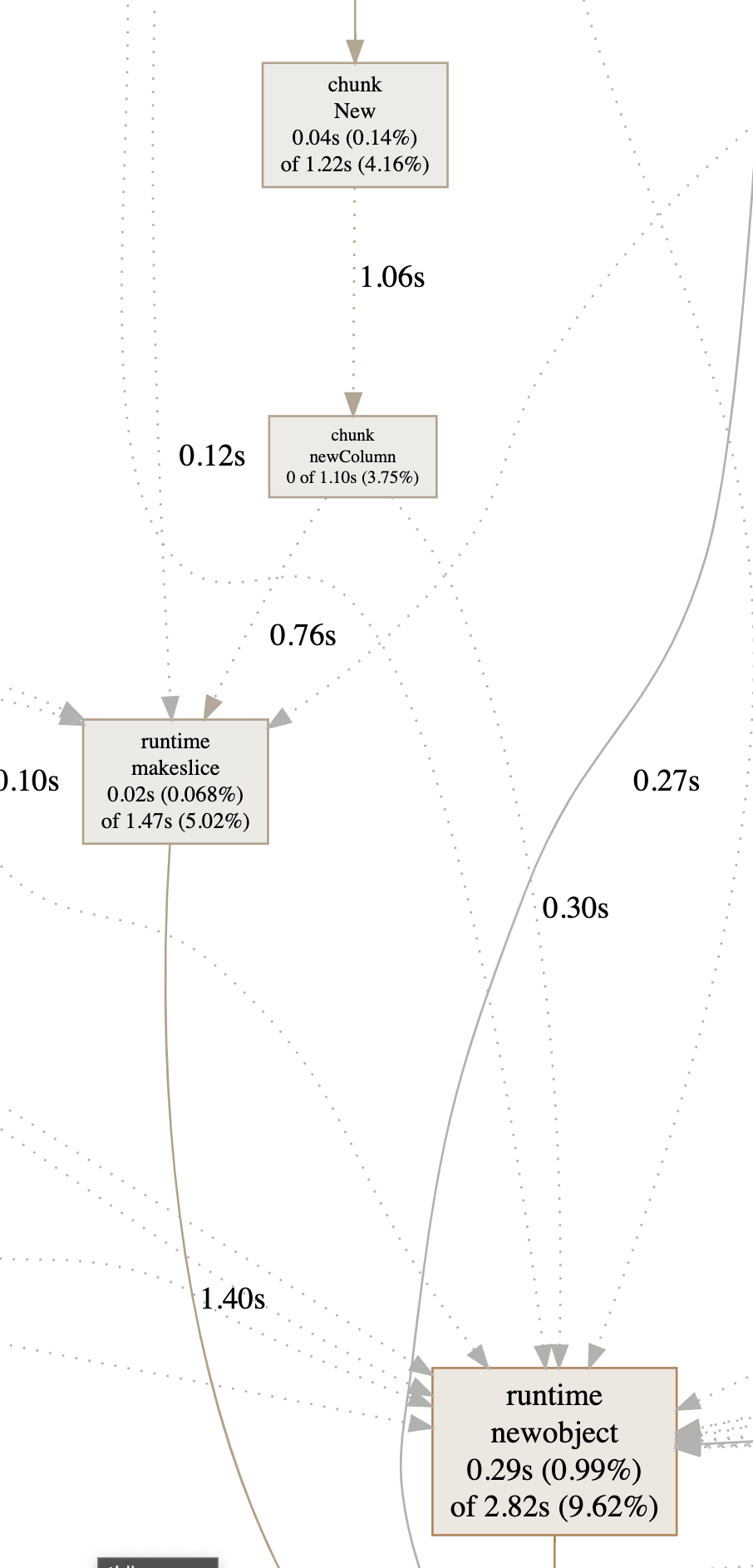
In the newColumn, we can see that we make the slice three times, I think we can only make a big slice instead
I write a simple benchmark
func BenchmarkMakeslice(b *testing.B) {
	cap := 2
	elemLen := 8
	n := 0
	for i := 0; i < b.N; i++ {
		elemBuf := make([]byte, elemLen)
		data := make([]byte, 0, cap*elemLen)
		nullBitmap := make([]byte, 0, (cap+7)>>3)

		n = len(elemBuf) + len(data) + len(nullBitmap) + n
	}
}

func BenchmarkMakeslice2(b *testing.B) {
	cap := 2
	elemLen := 8
	n := 0
	for i := 0; i < b.N; i++ {
		index := cap * elemLen
		cap2 := (cap + 7) >> 3
		buf := make([]byte, elemLen+index+cap2)
		elemBuf := unsafe.Slice(&buf[0], elemLen)
		data := unsafe.Slice(&buf[elemLen], index)
		nullBitmap := unsafe.Slice(&buf[index+elemLen], cap2)
		elemBuf = elemBuf[0:0]
		data = data[0:0]
		nullBitmap = nullBitmap[0:0]

		n = len(elemBuf) + len(data) + len(nullBitmap) + n
	}
}
The result is promising:
cpu: Intel(R) Core(TM) i7-4790K CPU @ 4.00GHz
BenchmarkMakeslice-8    	15793832	        84.81 ns/op
BenchmarkMakeslice2-8   	31883019	        37.09 ns/op
Because I think newColumn is frequently used, I guess we can get benefit from this.
BTW, another better way is to use a pool for Column, but seems that we tried this before but failed, maybe we should re-start this again.